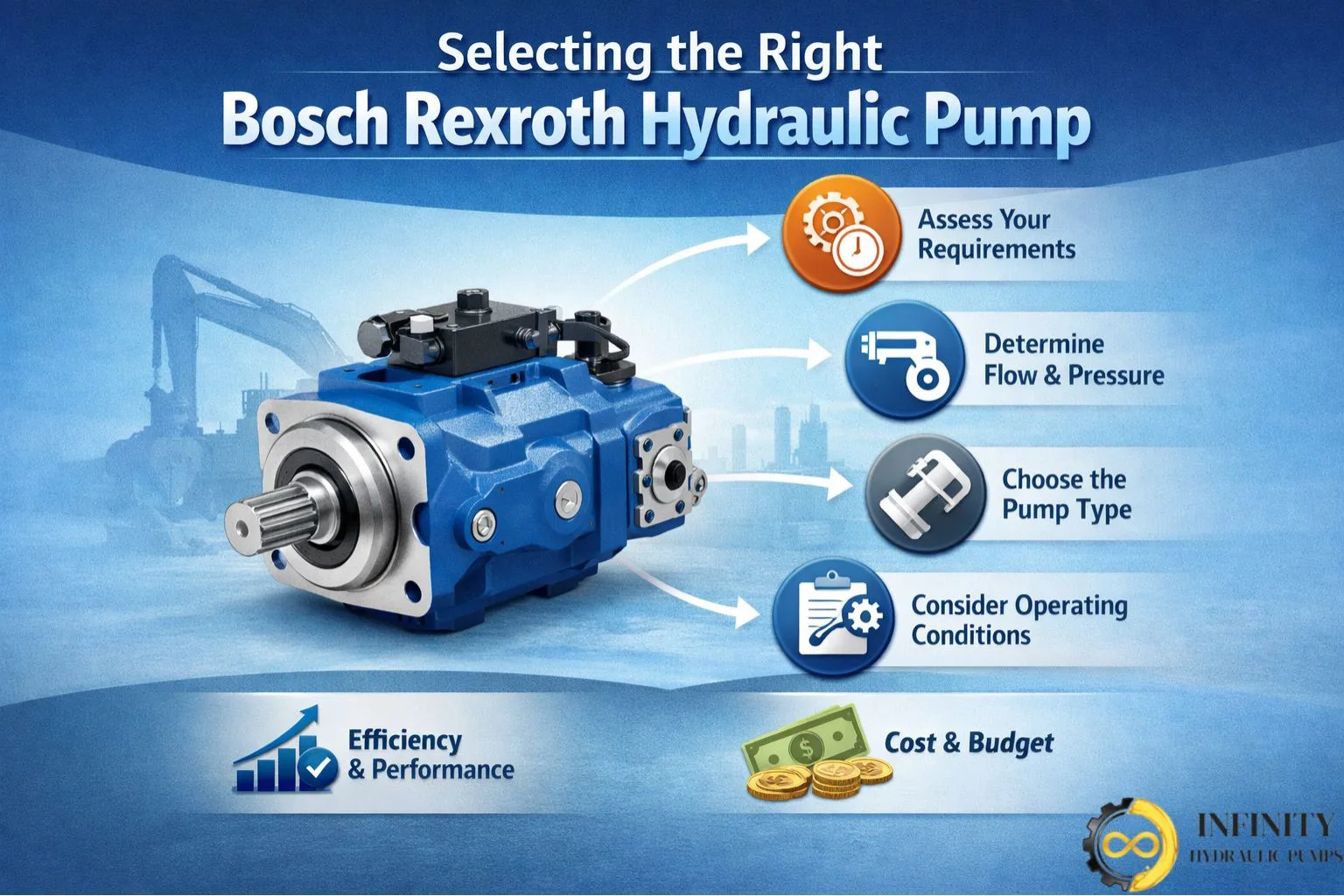
Selecting the right hydraulic pump is one of the most important decisions in any hydraulic system design. A wrong pump choice can lead to energy loss, overheating, frequent breakdowns, and higher maintenance costs.
Bosch Rexroth hydraulic pumps are known for precision engineering and long service life, but even the best pump will not perform well if it is not matched correctly to the machine.
This guide explains how to select the right Bosch Rexroth hydraulic pump in a clear and practical way, keeping Indian industrial conditions in mind. The focus is on engineering logic, not product selling.
Why Correct Pump Selection Matters
In many Indian factories, pumps are selected based on:
- Old machine nameplates
- Trial-and-error replacement
- Oversizing “to be safe”
These practices often create long-term problems such as:
- High power consumption
- Oil heating
- Noise and vibration
- Short seal and bearing life
Correct pump selection ensures:
- Stable machine performance
- Lower energy cost
- Longer component life
- Compliance with safety and reliability standards
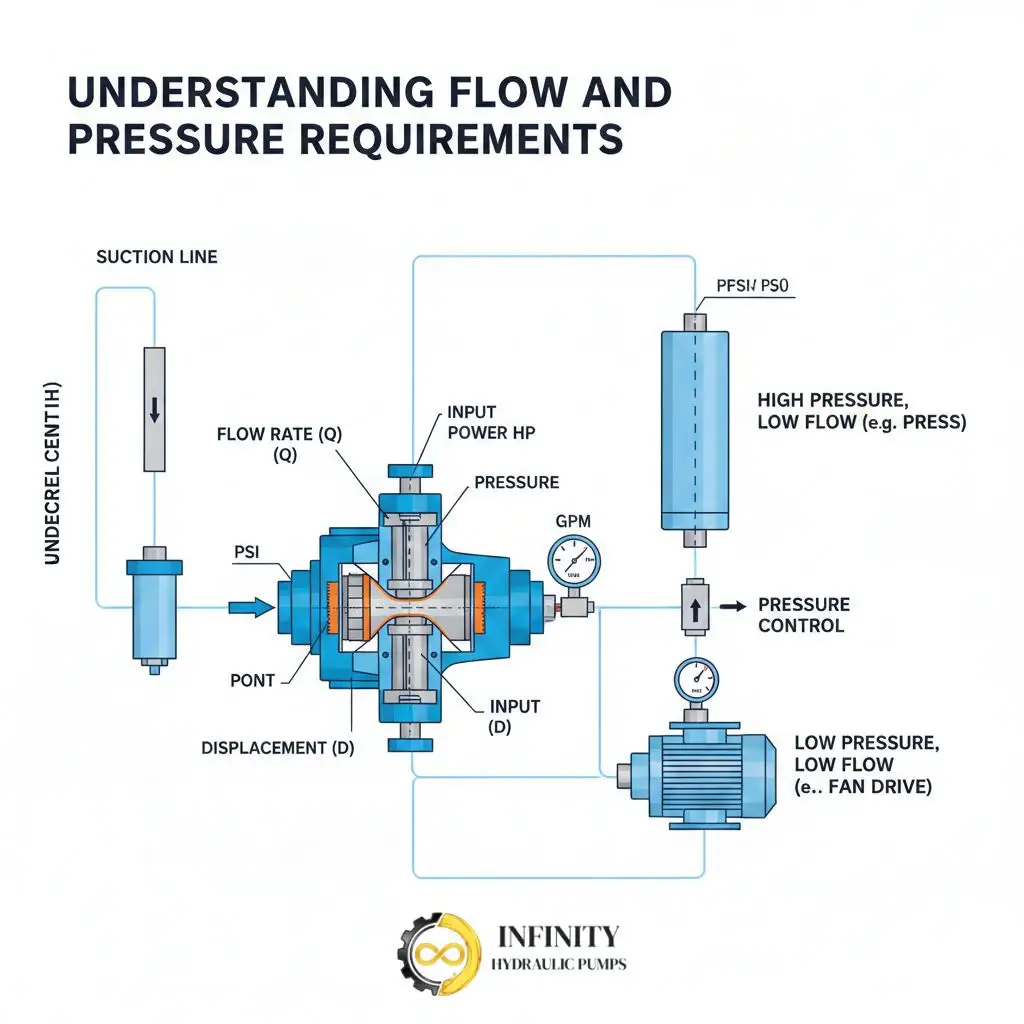
Step 1: Understanding Flow and Pressure Requirements
Flow Requirement (LPM)
Flow decides how fast the actuator (cylinder or motor) moves.
To estimate required flow:
- Identify cylinder diameter and stroke speed, or
- Identify hydraulic motor speed requirement
For example:
- Faster cycle time = higher flow
- Multiple actuators working together = combined flow demand
Common mistake: Selecting a high-flow pump without checking if the motor and valves can handle it.
Pressure Requirement (Bar)
Pressure depends on load, not pump size.
Pressure is influenced by:
- Load weight
- Cylinder area
- Mechanical resistance
- Safety margin
Bosch Rexroth pumps are designed for specific pressure ranges. Selecting a pump that constantly works near its maximum pressure reduces its life.
Best practice: Pump pressure rating should comfortably exceed normal working pressure, not match it exactly.
Step 2: Evaluating the Machine Duty Cycle
Duty cycle defines how often and how long the pump operates.
Ask these questions:
- Is the machine running continuously or intermittently?
- Does it idle between cycles?
- Are there frequent pressure peaks?
Why Duty Cycle Matters
- Continuous duty machines need pumps with better thermal handling
- Intermittent machines may benefit from variable displacement pumps
- High shock loads require robust internal design
Oversight to avoid: Using a pump meant for intermittent duty in a 24/7 production line.
Step 3: Considering Operating Environment in India

Indian operating conditions are often tougher than standard lab conditions.
Key factors:
- High ambient temperature
- Dust and contamination
- Voltage fluctuations affecting motor speed
- Irregular maintenance schedules
Bosch Rexroth pumps perform best when:
- Oil cleanliness levels are maintained
- Correct viscosity oil is used for temperature range
- Proper filtration is installed
Reality check: A pump that works well in a clean OEM setup may fail early in a harsh plant environment if not selected carefully.
Step 4: Matching Pump Type to Application
Bosch Rexroth offers different pump technologies. Choosing the right type is critical.
Gear Pumps
Best suited for:
- Simple hydraulic circuits
- Low to medium pressure
- Cost-sensitive applications
Limitations:
- Fixed flow
- Lower efficiency compared to piston pumps
Vane Pumps
Best suited for:
- Quiet operation
- Medium pressure
- Machine tools and industrial equipment
Advantages:
- Smooth flow
- Lower noise
Axial Piston Pumps
Best suited for:
- High pressure
- Variable flow requirement
- Energy-efficient systems
Common applications:
- Injection moulding
- Press machines
- Mobile hydraulics
Selection rule: Do not choose piston pumps only because they are “premium”. Choose them when the application actually needs variable control and high efficiency.
Step 5: Checking System Compatibility
Before finalising a pump, check:
- Prime mover (motor or engine) speed
- Shaft type and mounting flange
- Direction of rotation
- Control type (manual, pressure, load-sensing)
Ignoring these details leads to installation issues and system imbalance.
Common Pump Selection Mistakes to Avoid

- Selecting pump only by old model number
- Oversizing flow “for future use”
- Ignoring oil temperature rise
- Assuming all Rexroth pumps are interchangeable
- Not considering service and spare availability
These mistakes increase long-term cost even if initial purchase looks correct.
A Practical Consultation Approach by Infinity Hydraulic Pumps
At Infinity Hydraulic Pumps, pump selection is treated as a technical process, not a sales activity.
The approach typically includes:
- Understanding machine function and cycle
- Reviewing existing hydraulic circuit
- Analysing pressure-flow relationship
- Considering Indian site conditions
- Recommending a suitable Rexroth pump configuration
This helps customers avoid:
- Repeated pump failures
- Energy wastage
- Improper upgrades
The goal is correct fitment, not forced replacement.
Final Thoughts
Selecting the right Bosch Rexroth hydraulic pump is about engineering clarity, not brand or price alone. When flow, pressure, duty cycle, environment, and application type are properly evaluated, the hydraulic system becomes reliable and efficient.
A well-selected pump:
- Runs cooler
- Consumes less power
- Delivers consistent output
- Reduces downtime
For Indian industries, this approach leads to long-term operational stability and cost control.