Bosch Rexroth hydraulic pumps are known for precision engineering, stable performance, and long service life. But even the best hydraulic pump will fail early if daily operating conditions and maintenance practices are ignored.
In Indian manufacturing plants, power packs often run for long hours, face temperature fluctuations, dusty environments, and inconsistent oil quality. Over time, these factors directly affect pump efficiency, noise levels, and internal wear.
This guide explains practical, field-tested maintenance tips to extend the working life of Bosch Rexroth hydraulic pumps. The focus is on preventive care, not repair or service selling—based on real industry experience from Infinity Hydraulic Pumps, a trusted hydraulic solution provider serving industries across India.
Why Proper Maintenance Matters for Rexroth Hydraulic Pumps
Bosch Rexroth pumps are designed for demanding industrial applications, but their lifespan depends on:
- Oil cleanliness and quality
- Stable operating temperature
- Correct filtration system
- Routine inspection and monitoring
- Early identification of wear signs
Ignoring these basics often leads to internal scoring, bearing damage, seal failure, and sudden breakdowns—issues that are avoidable with disciplined maintenance.
1. Maintain Correct Oil Cleanliness Standards
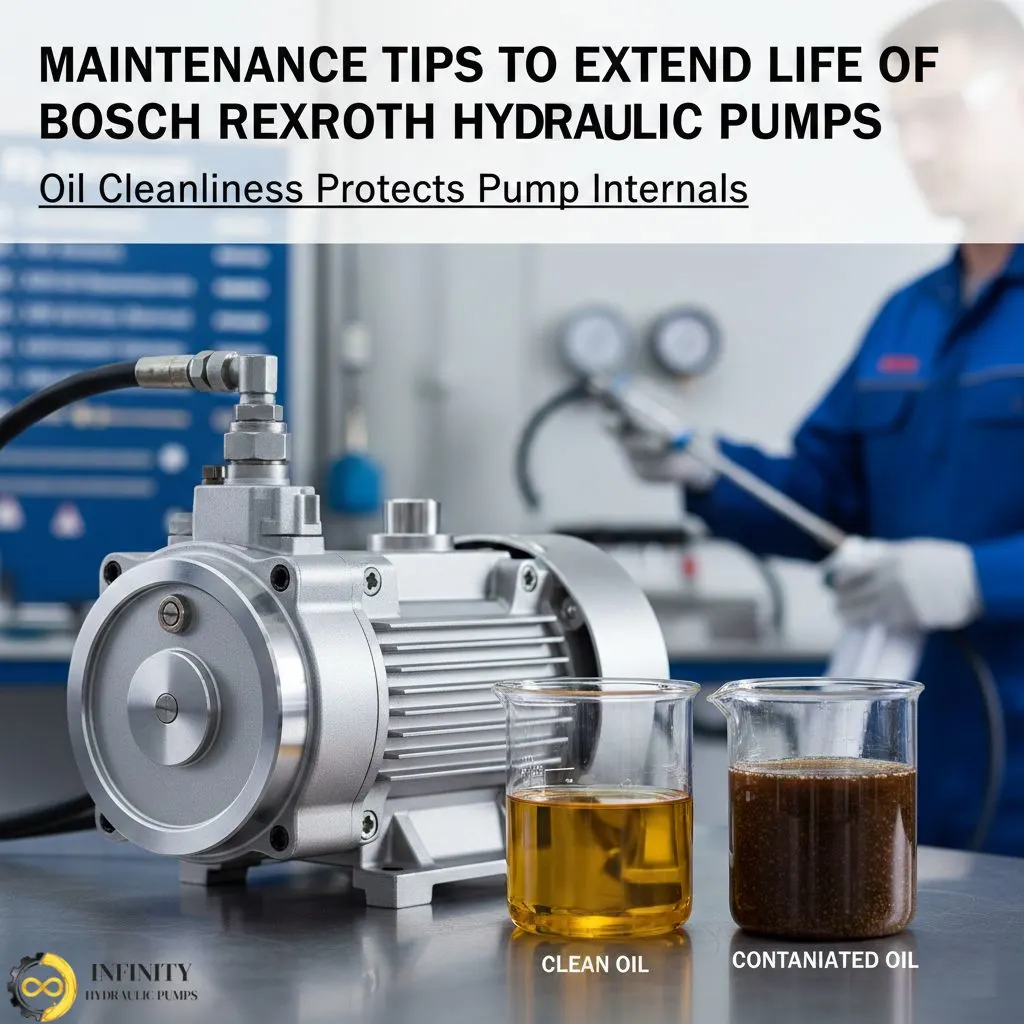
Oil contamination is the number one reason for hydraulic pump failure.
Even microscopic particles can damage internal pump components such as pistons, swash plates, and bearings.
Recommended Oil Cleanliness Levels
For most Bosch Rexroth hydraulic pumps:
- ISO 4406: 18/16/13 or cleaner
- For high-pressure or servo applications: 17/15/12
Common Contamination Sources in Indian Plants
- Dust entering through breather caps
- Poor-quality refilled oil
- Open oil drums stored without covers
- Worn seals allowing external particles inside
Practical Tip from Field Experience
At Infinity Hydraulic Pumps, many premature pump failures are traced back to new oil that was never filtered before filling. Always filter oil while filling, even if it is fresh from a sealed drum.
2. Use Proper Filtration – Not Just Any Filter
A hydraulic filter is not an accessory; it is a critical pump protection device.
Key Filtration Points to Check
- Suction filter or strainer: Prevents large particles from entering the pump
- Pressure line filter: Protects valves and downstream components
- Return line filter: Captures wear particles before oil returns to tank
Best Practices
- Use filters with correct micron rating recommended for Rexroth systems
- Avoid cheap, non-standard filter elements
- Replace filter elements on time, not only when blocked
Blocked or bypassed filters allow unfiltered oil to circulate, accelerating internal wear.
3. Control Operating Temperature Consistently
Hydraulic oil temperature directly affects pump life.
Ideal Operating Temperature Range
- 40°C to 55°C for most Rexroth hydraulic pumps
Problems Caused by High Temperature
- Oil viscosity drops
- Lubrication film becomes weak
- Internal leakage increases
- Seals harden and crack
Common Reasons for Overheating
- Undersized oil cooler
- Dirty heat exchanger
- Continuous high-pressure operation
- Incorrect oil grade
Simple Monitoring Tip
Install a temperature gauge on the tank and record readings daily. Sudden temperature rise is often the first warning sign of system problems.
4. Follow a Routine Inspection Checklist
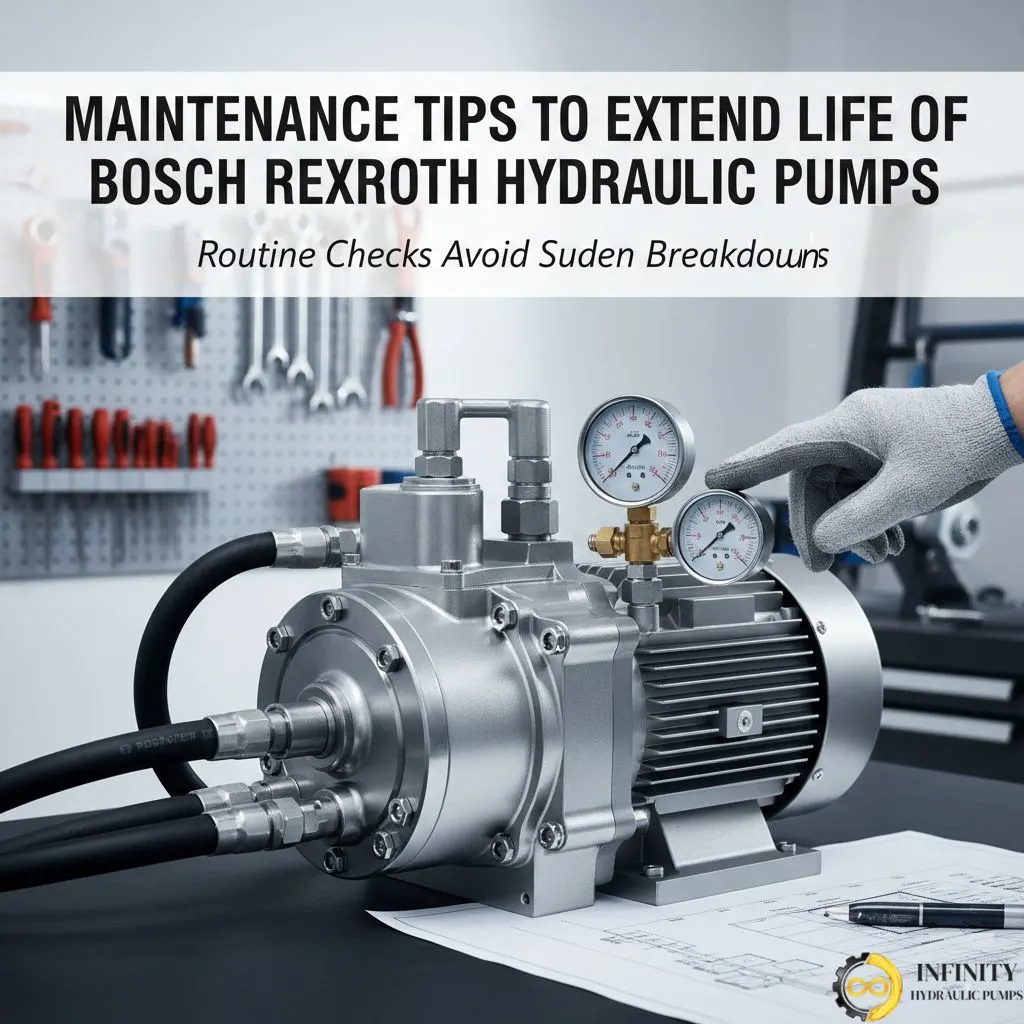
Daily and weekly inspections help detect issues before they turn into failures.
Daily Checks (5 Minutes)
- Oil level in tank
- Abnormal pump noise
- Excessive vibration
- Oil leakage near pump shaft seal
Weekly Checks
- Oil colour and smell
- Filter clogging indicators
- Temperature trends
- Hose and fitting condition
Monthly Checks
- Alignment between motor and pump
- Breather condition
- Mounting bolt tightness
This simple checklist has helped many plants avoid unexpected shutdowns.
5. Understand Preventive vs Breakdown Maintenance
Breakdown Maintenance (Risky Approach)
- Run pump until failure
- Sudden production stoppage
- Higher repair cost
- Possible damage to valves and actuators
Preventive Maintenance (Recommended)
- Planned inspections
- Controlled oil and filter replacement
- Predictable downtime
- Longer pump and system life
From industry experience, preventive maintenance can extend hydraulic pump life by 30–50% in continuous operations.
6. Use Correct Oil Grade and Change Intervals
Using the wrong oil grade can quietly damage the pump over time.
Important Oil Guidelines
- Follow Bosch Rexroth recommended viscosity class
- Avoid mixing different oil brands
- Do not extend oil life beyond tested limits
Oil Change Should Be Based On:
- Oil analysis results
- Operating temperature
- Contamination level
- Not just calendar time
Infinity Hydraulic Pumps advises customers to rely on condition-based oil change, especially in high-duty applications.
7. Learn from Field Insights – Real Causes of Pump Damage
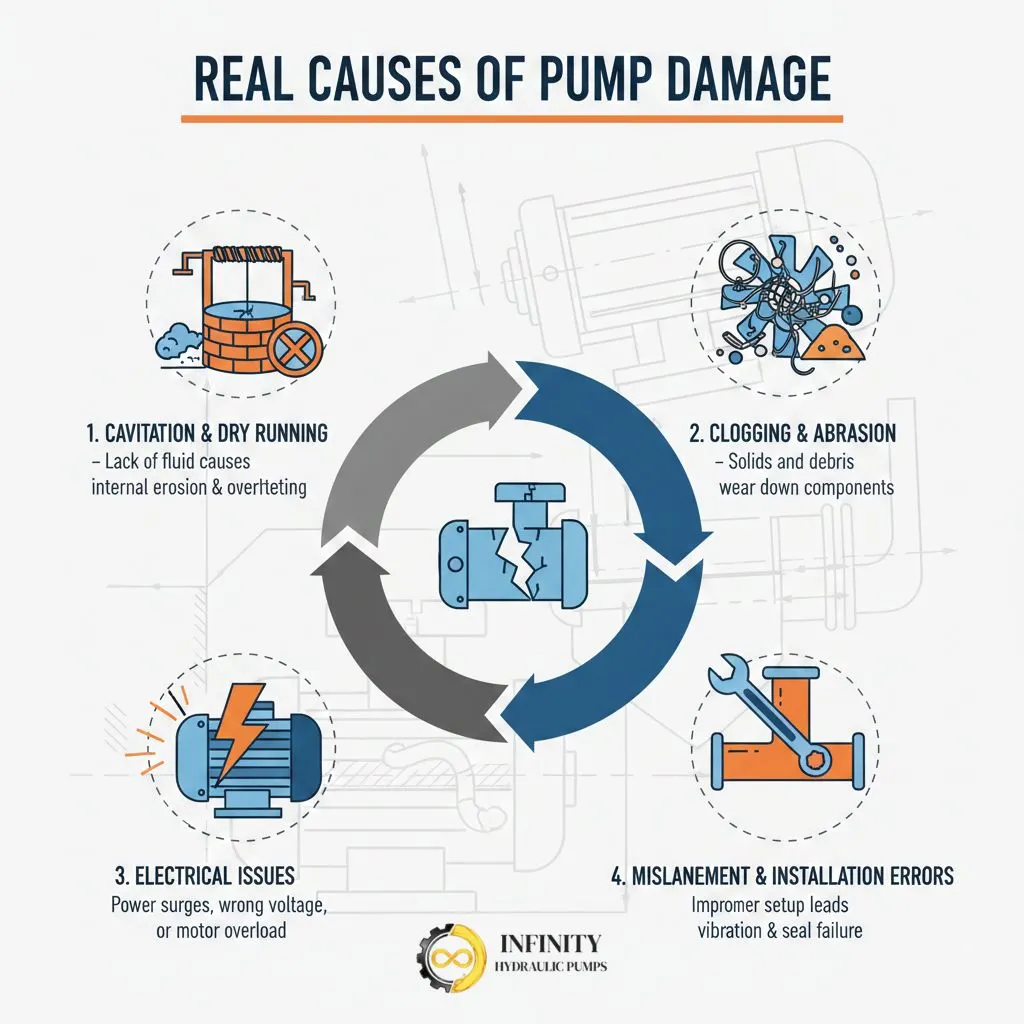
Based on hands-on diagnostics handled by Infinity Hydraulic Pumps across Indian industries, the most common avoidable issues are:
- Running pumps with low oil level
- Ignoring early noise or vibration
- Delayed filter replacement
- Poor cooling system maintenance
- Improper installation alignment
Most of these problems develop slowly and give warning signs—if monitored regularly.
Final Thoughts
Bosch Rexroth hydraulic pumps are built for reliability, but maintenance discipline decides their true lifespan. Clean oil, correct filtration, stable temperature, and routine inspections are not complex tasks—but they make a big difference.
For Indian manufacturing plants operating under tough conditions, these maintenance practices help ensure:
- Longer pump life
- Stable system performance
- Lower operating costs
- Fewer unplanned shutdowns
Infinity Hydraulic Pumps continues to support industries across India by sharing practical hydraulic knowledge, genuine components, and technical expertise—helping customers get the best value from their Bosch Rexroth hydraulic systems.